
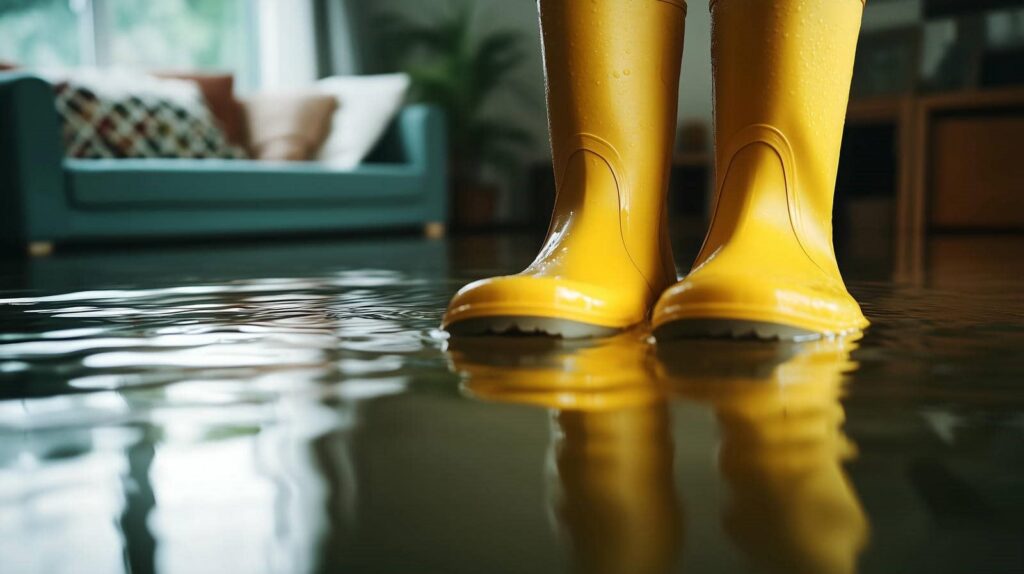
In the wake of a flood, your home can feel like a ship adrift in a storm. You need a solid plan to navigate through the chaos. First, you’ll want to focus on immediate water extraction, then assess hidden moisture that could lead to mold. Finally, effective restoration techniques will safeguard your space for the future. Understanding these steps is essential, but what exactly should you do first?
Key Takeaways
- Wear protective gear to ensure safety while assessing and addressing flood damage.
- Remove standing water using pumps or wet vacuums to minimize further damage.
- Inspect hidden areas for moisture to prevent mold growth and ensure thorough drying.
- Use industrial fans and dehumidifiers to promote rapid drying of affected spaces.
- Document the damage and cleanup process for insurance claims and future reference.
How to Safely Assess Water Damage in Your Home
Before you jump into cleanup, it’s essential to safely assess the water damage in your home. Start by wearing protective gear like gloves and boots to ensure your flood safety.
Check for structural damage; look for sagging ceilings or walls that might indicate a risk. Next, inspect the affected areas for standing water and moisture levels. Use a moisture meter if you have one, but a simple visual check can also help.
Document everything with photos for your records or insurance claims. Identify potential hazards like electrical issues or mold growth, and avoid areas that seem unsafe.
Completing this damage assessment will guide your cleanup efforts and help ensure you approach the situation with confidence and care.
Next Steps: How to Remove Water and Moisture?
Once you’ve assessed the damage, the next step is removing water and moisture effectively. Start with water extraction—use a pump or wet vacuum to remove standing water. Make sure to wear protective gear to keep yourself safe.
Once the bulk of the water is gone, focus on moisture control. Open windows and doors to promote airflow, and use fans or dehumidifiers to speed up the drying process.
Check hidden areas like under carpets and behind walls, as moisture can linger there. Don’t forget to monitor humidity levels, aiming for below 60%. This will help prevent mold growth and further damage.
Taking these steps will create a safer environment for you and your loved ones as you recover.
Effective Restoration and Sanitization Techniques for Water Damaged Areas
As you tackle the restoration and sanitization of water-damaged areas, it’s essential to act swiftly to minimize lasting effects.
Start by thoroughly drying the space using industrial dehumidifiers and fans. Proper equipment selection is key; invest in high-quality tools to ensure effective moisture removal.
Once dry, clean surfaces with antifungal solutions to promote mold prevention. Pay special attention to hidden spots like behind walls and under carpets, where moisture can linger.
After cleaning, consider applying a mold-resistant sealant to surfaces to further safeguard against future issues.
Finally, monitor the area for any signs of mold growth in the coming weeks. Acting promptly and effectively will help restore your space and give you peace of mind.
Frequently Asked Questions
How Can I Prevent Mold Growth After a Flood?
To prevent mold growth after a flood, control humidity by using dehumidifiers and fans. Ensure proper ventilation and dry out affected areas within 24-48 hours. Regularly check for leaks to maintain a mold-free environment.
Should I Contact My Insurance Company Immediately?
Yes, you should contact your insurance company immediately. Starting the claim process for your flood insurance helps ensure you document damage quickly and receive the support you need during this stressful time.
What Personal Protective Equipment Do I Need?
For effective emergency efforts, you’ll need essential protective gear like gloves, goggles, and masks. Prioritize safety measures to safeguard yourself against hazards. Staying safe ensures you can help others during this challenging situation.
How Long Does the Drying Process Typically Take?
The drying process typically takes 24 to 48 hours, depending on the extent of flood water removal and the drying techniques used. Stay patient, and ensure proper ventilation to speed things up and prevent mold.
When Is It Safe to Re-Enter My Home?
Re-entering your home’s like stepping back into a fragile shell. Wait until flood assessment confirms safety, ensuring structural integrity and air quality. Prioritize home safety—your well-being’s worth the patience. Don’t rush; protect what matters.
Final Thoughts
So, you think you can just let that water sit and hope it disappears? Good luck with that! By following the three essential steps—extracting water, inspecting for moisture, and restoring your home—you’re not just preventing mold; you’re also keeping your home from becoming a swampy disaster zone. Remember, ignoring water damage is like ignoring a screaming toddler: it won’t just go away, and you’ll definitely regret it later! Get to work and save your space!