
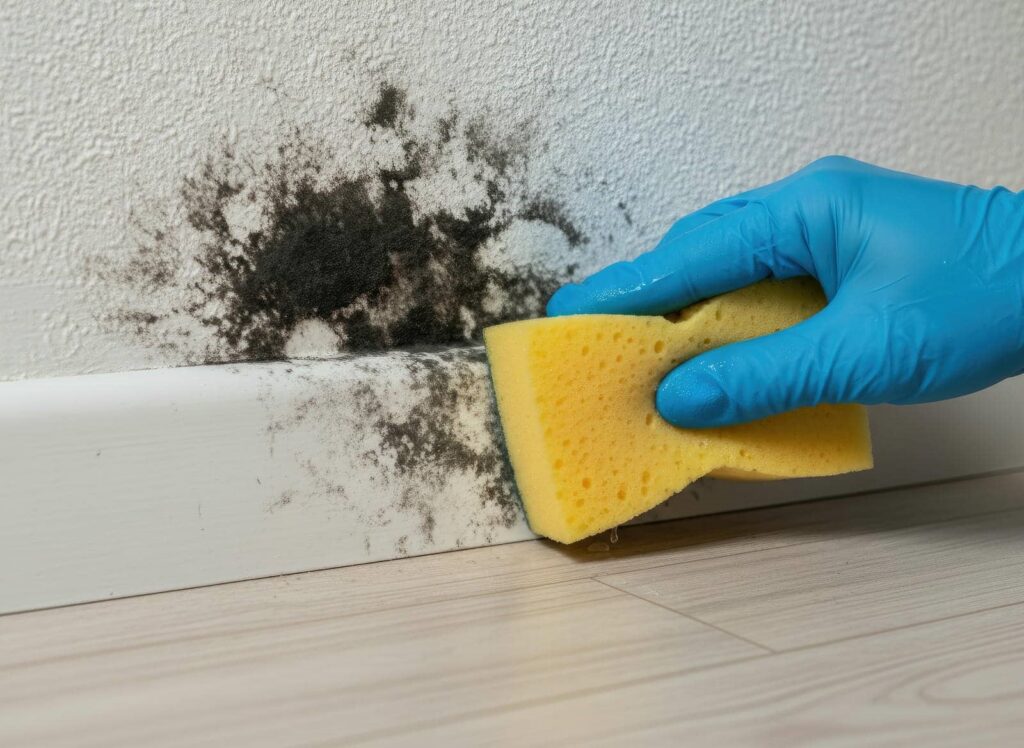
When water gets in, how fast can mold follow? You need to act within 24 to 48 hours, dry the area with fans and dehumidifiers, remove visible mold with proper containment and PPE, and check for hidden moisture before it spreads. You also need to fix the intrusion source and keep indoor humidity low. One missed step can turn a cleanup into a longer, costlier problem.
Key Takeaways
- Dry wet areas within 24 to 48 hours using fans and dehumidifiers to prevent mold growth.
- Remove standing water and inspect hidden spaces for trapped moisture in walls, floors, and baseboards.
- Wear PPE and clean visible mold on hard surfaces safely, isolating the area while preventing spore spread.
- Find and repair the water source, such as leaks, roof damage, or foundation issues, to stop mold from returning.
- Replace porous materials that stay wet, and keep indoor humidity below 60% to prevent future mold growth.
Dry Out Water-Damaged Areas Fast
Act quickly to dry out water-damaged areas, because mold can begin growing within 24 to 48 hours. You should remove standing water, then target hidden moisture in walls, flooring, and insulation.
Use high-capacity fans and verify dehumidifier placement so airflow reaches the dampest zones without recirculating humid air. Open windows only if outdoor conditions support ventilation improvement; otherwise, keep the space closed and mechanically controlled.
Check humidity with a meter and aim below 60 percent. If you belong to a crew handling the cleanup, coordinate tasks so you don’t miss secondary wet spots behind baseboards or under cabinets.
Drying fast reduces material loss, limits odor, and lowers the chance of structural deterioration. Track progress daily until surfaces return to normal.
Remove Visible Mold Safely
Before you scrub anything, isolate the moldy area and wear the right personal protective equipment: an N95 or higher respirator, gloves, eye protection, and disposable coveralls if the contamination is extensive. You’ll protect yourself and keep the work controlled.
Dampen hard surfaces lightly, then use detergent and water to wipe visible growth; avoid dry brushing, which releases spores. For porous materials, remove and discard items that can’t be cleaned effectively.
Use separate cloths for each section, and seal waste in bags before you leave the room. Different mold types may stain differently, but you should treat all visible growth as potentially hazardous.
Keep your safety equipment on until you finish cleaning, then remove it carefully to avoid spread and maintain the standards your team expects.
Check for Hidden Moisture and Mold
After you clear the visible growth, you still need to check for concealed moisture, since mold often develops behind walls, under flooring, inside cabinets, and in insulation.
You can’t rely on surface appearance; use moisture detection tools to confirm dry conditions in suspect areas. Inspect for hidden leaks around plumbing penetrations, window frames, and baseboards, and note any staining, swelling, or soft materials.
If readings stay elevated, open targeted sections for verification and document what you find so your team stays aligned.
Pay close attention to cool, damp, or musty zones, because they often signal active microbial growth.
Fix the Source of Water Damage
Identify and repair the source of water intrusion so the mold issue doesn’t return. You need to trace the water damage to its origin before you clean anything else. Inspect roofs, windows, foundations, and appliances, but give special attention to plumbing issues such as leaking supply lines, failed seals, and corroded joints.
Shut off the affected system, then replace damaged components with code-compliant materials. If you find recurring moisture, pressure-test the line and document the failure point.
You belong in a space that’s dry, stable, and safe, so don’t guess at the fix. Use a licensed contractor when the problem exceeds basic repairs or when hidden structural damage is possible.
Precise correction now protects your home, your team, and your restoration effort.
Prevent Mold After Water Damage
Once you’ve corrected the water source, you need to stop residual moisture from turning into a new mold problem.
Dry all affected materials within 24 to 48 hours using fans, dehumidifiers, and increased ventilation. Remove wet porous items that can’t be fully dried, including carpet padding and damaged drywall.
Monitor humidity control with a hygrometer and keep indoor relative humidity below 60%. Open cabinets, pull furniture away from walls, and expose hidden spaces so air can circulate.
Clean hard surfaces with detergent and dry them completely. For effective mold prevention, inspect baseboards, attics, and crawl spaces for dampness every day until the area is stable.
When you act quickly and systematically, you protect your home and help everyone in it breathe easier.
Frequently Asked Questions
How Quickly Does Mold Start Growing After Flooding?
Mold can start growing within 24 to 48 hours after flooding, so your flooding aftermath demands fast drying. You’ll want to understand the mold growth timeline and remove moisture immediately to protect your space and community.
What Health Symptoms Suggest Mold Exposure?
You may notice sneezing, coughing, wheezing, itchy eyes, headaches, and skin irritation; severe mold allergies can worsen respiratory issues, especially asthma. If symptoms improve away from damp areas, you’re likely reacting to mold exposure.
When Should I Hire a Professional Mold Inspector?
You should hire a professional mold inspector when you notice persistent odors, visible growth, or unexplained symptoms. Their mold inspection can confirm hidden contamination, and professional services help you protect your home and your community confidently.
Can Insurance Cover Mold Remediation Costs?
Yes, your insurance policies can cover mold remediation costs if mold coverage applies and the damage stems from a covered water loss. You should review exclusions, limits, and claim deadlines, then document everything carefully.
Which Materials Are Hardest to Save After Mold Damage?
You’ll struggle most with porous drywall, insulation, carpet, and upholstered fabrics; they’re mold’s favorite banquet. You can sometimes save mold resistant materials with salvage techniques, but you’ll usually replace heavily contaminated items to protect your space.
Review
Act fast after water damage: mold can begin growing within 24 to 48 hours in damp materials. You should dry affected areas immediately with high-capacity fans and dehumidifiers, remove visible mold using proper containment and PPE, and verify that hidden moisture is gone with detection tools. Then you need to fix the water source and keep indoor humidity low. If you inspect vulnerable spaces regularly, you’ll greatly reduce the risk of recurring mold.