
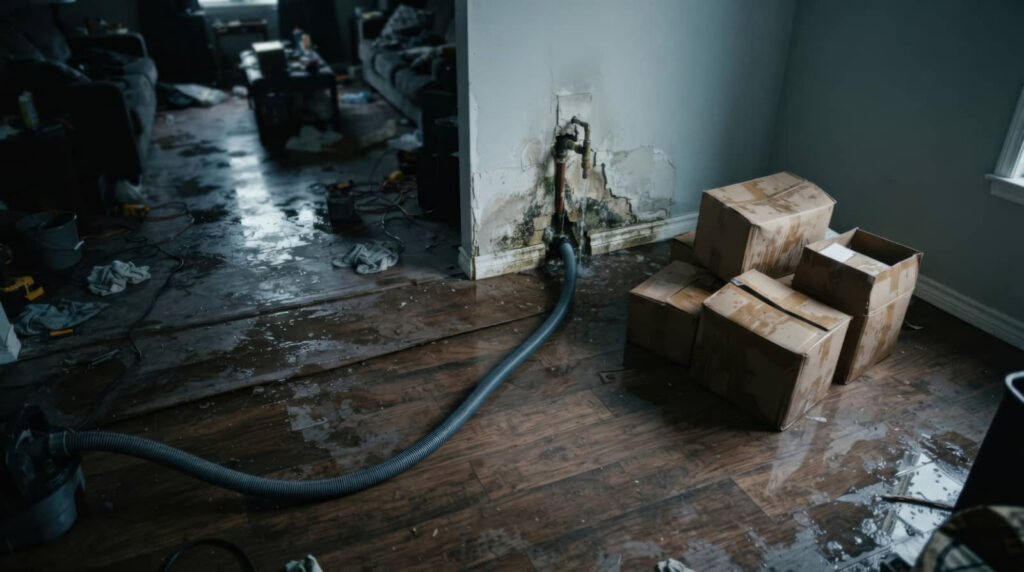
Is it really true that black mold can start after just a day or two of hidden moisture? After a pipe burst, you need to shut off the water fast, remove standing water, and dry walls, cabinets, and insulation before spores take hold. If you control humidity, inspect damaged materials, and spot early warning signs, you can limit the problem before it spreads further.
Key Takeaways
- Shut off the water source immediately and remove standing water within 24-48 hours to stop mold growth.
- Dry hidden areas, insulation, and flooring with fans and dehumidifiers while keeping indoor humidity between 30%-60%.
- Remove and discard porous materials like drywall, insulation, carpet padding, and paper goods if they stayed wet over 24-48 hours.
- Clean hard, nonporous surfaces with detergent and water, then disinfect and dry them quickly.
- Wear gloves, eye protection, and an N95 respirator, and inspect for recurring leaks, odors, or visible mold.
Stop the Water and Kill the Moisture Source
Before you treat black mold, you need to stop the water source that’s feeding it. In a burst-pipe cleanup, shut off the valve, then inspect joints, supply lines, and fittings for active leaks.
You’ll protect your space faster when you seal damaged areas and replace failed components with water resistant materials. Add moisture barriers behind walls, under floors, and around vulnerable framing so trapped dampness can’t keep feeding growth.
If insulation is wet, remove it and dry the cavity thoroughly. Use fans and dehumidifiers to lower humidity, but don’t mask a leak with temporary fixes.
You’re not dealing with mold alone; you’re restoring a healthy environment your household can trust. Once the source is controlled, you can move forward with remediation safely.
Remove Standing Water Before Mold Starts
You need to stop standing water fast, because mold can start growing within 24 to 48 hours.
Dry hidden areas like under flooring, inside cabinets, and behind walls with fans and moisture checks.
If humidity stays high, use a properly sized dehumidifier to keep surfaces dry.
Stop Water Quickly
Standing water gives mold the moisture it needs to start growing fast, so dry spills, leaks, and flooded areas as soon as you find them. Shut off the source, then use pumps, wet vacs, mops, and towels to remove water fast. You’ll protect your home and help your team act as one against mold.
During a pipe inspection, check joints, valves, and appliance lines for fresh leaks, then fix them immediately. Place moisture barriers around vulnerable areas to slow seepage and keep surfaces drier. Clear water from floors, baseboards, and trim at once, and remove wet items that trap moisture.
Track humidity with a meter and keep cleanup continuous until every surface feels dry. Fast action lowers your risk and keeps mold from taking hold.
Dry Hidden Areas
Dry hidden areas quickly because trapped moisture behind walls, under cabinets, and beneath flooring can feed mold before you notice it. Open access panels, remove baseboards if needed, and inspect hidden compartments for damp insulation, pooled water, or swollen materials.
Wipe surfaces dry, then use towels, wet vacs, and fans to clear residual moisture. You should pull back loose flooring edges and check around pipe chases, because water often lingers there.
If moisture barriers were damaged, replace them so dry materials stay protected. Keep monitoring these spaces for soft spots, staining, or odor over the next day.
Your crew can stay ahead of black mold when you treat every concealed cavity as part of the drying zone, not an afterthought.
Use Proper Dehumidifiers
Once you’ve removed pooled water, use a properly sized dehumidifier to pull excess moisture from the air before mold can colonize damp materials.
Choose dehumidifier types that match the space: refrigerant units work well in warm rooms, while desiccant models help in cooler areas.
Keep doors and windows closed so the unit can do its job efficiently. You should target ideal settings around 30% to 60% relative humidity, checking with a hygrometer rather than guessing.
Empty the reservoir or route the drain hose so you don’t stop the cycle. In a damaged room, run the unit continuously until surfaces feel dry and readings stabilize.
When you stay disciplined with drying, you protect your home and help your crew prevent black mold together.
Dry the Burst Pipe Area Quickly
Move fast to remove moisture from the burst pipe area before mold can take hold. You should shut off the water, then open access points so air can move across wet surfaces.
Use ventilation techniques like opening windows, running exhaust fans, and creating crossflow with box fans. Position drying equipment close to baseboards, subflooring, and wall cavities so it reaches trapped water quickly.
Pull up saturated carpet padding, mop standing water, and wipe hard surfaces with clean, dry cloths. Check hidden spaces behind cabinets and inside wall openings, since pooled moisture often lingers there.
Keep the work zone clear so your team can move efficiently and stay focused. The faster you dry the area, the less chance mold has to grow and spread.
Control Humidity During Drying
You should use dehumidifiers immediately to pull excess moisture out of the air during drying.
Keep moisture levels in the affected area under regular review with a meter or hygrometer.
Stable, low humidity helps you dry materials faster and lowers the risk of mold growth.
Use Dehumidifiers
To keep black mold from taking hold during drying, use dehumidifiers to lower indoor humidity and speed moisture removal.
Choose dehumidifier types based on room size and damage level: portable units work for small spaces, while larger extraction models suit saturated areas.
Place each unit in the most affected zone, close doors to create a controlled drying area, and keep air moving so moisture reaches the machine.
For strong moisture control, empty reservoirs often or connect a drain hose if the unit allows it.
You’ll protect the space more effectively when you match capacity to the load and run equipment continuously until materials feel dry.
Your crew can stay ahead of mold growth when humidity stays low and drying stays efficient.
Monitor Moisture Levels
Track humidity throughout the drying process so you can confirm that moisture is dropping fast enough to prevent black mold growth.
Use moisture monitoring tools, such as hygrometers and meter readings on framing, drywall, and flooring, to verify progress in each room.
Keep indoor relative humidity between 30% and 60% while materials dry. If levels rise, increase airflow, run dehumidifiers longer, and check for hidden wet zones behind baseboards or inside wall cavities.
Log readings at the same time each day so you can spot trends and stay in control with your team.
Consistent humidity control helps you dry structures safely, protect indoor air quality, and reduce the chance of mold returning after the pipe burst.
Inspect Insulation, Baseboards, and Drywall
Inspect insulation, baseboards, and drywall for any signs of moisture intrusion, staining, warping, or a musty odor, since these materials can trap hidden mold growth.
During your insulation assessment, press lightly on suspect areas to check for dampness and note any sagging or compressed sections.
For drywall inspection, look closely at seams, corners, and fastener points where water often shows up first.
Run your hand along baseboards to find soft spots, swelling, or paint bubbling.
Use a flashlight to catch subtle discoloration and hidden edges.
If you spot active moisture, keep the area ventilated and document what you find.
You’re protecting your space and your people by catching damage early, before black mold gets a foothold.
Remove or Discard Porous Materials
You should remove and discard porous materials that have been contaminated with black mold, because they can hold spores deep inside their fibers.
Throw out items like insulation, carpet, ceiling tiles, and heavily damaged drywall if cleaning won’t fully restore them.
Seal the waste in bags before disposal so you don’t spread contamination during handling.
Porous Material Removal
If mold has spread into porous materials, remove and discard them rather than trying to clean them in place. You should assess porous material types quickly: drywall, insulation, ceiling tiles, carpet, upholstered furniture, and particleboard often wick moisture deep inside.
Use removal techniques that limit dust and spread; cut affected sections into manageable pieces, bag them as you go, and keep the area contained. Wear gloves, eye protection, and an N95 respirator so you and your team stay safer.
Don’t salvage items that stayed wet for more than 24 to 48 hours or show visible growth. Once you expose clean framing, dry it fully and check hidden cavities. Acting decisively helps your space recover faster and keeps your crew aligned on a safe, mold-free result.
Contaminated Item Disposal
When porous materials are contaminated, remove and discard them instead of trying to clean them in place. You’ll protect your home’s air quality and reduce black mold risk by acting fast.
Bag affected textiles, carpet padding, insulation, and paper goods before transport, then seal and label them for disposal. Follow local rules for contaminated clothing disposal so you don’t spread spores during handling.
For damaged furniture removal, wear gloves, an N95 respirator, and closed-toe shoes, and move pieces through a clear path. Keep salvageable items separate from waste, but if water soaked through foam, particleboard, or upholstery, treat it as trash.
Work with your team, document what you remove, and sanitize the area next.
Clean and Disinfect the Affected Area
Start by wearing gloves, a mask, and eye protection, then remove visible mold from hard, nonporous surfaces with detergent and water.
Scrub thoroughly, rinse, and dry the area fast so moisture doesn’t linger. For mold cleaning, use fresh solution on each section and discard dirty cloths after one pass.
Next, apply approved disinfecting techniques to sanitized surfaces, following the label’s contact time exactly.
Keep fans and dehumidifiers running to help the space dry, and open windows if outdoor conditions are safe.
Clean nearby tools, baseboards, and fixtures too, because mold can spread through missed residue.
You’re building a safer, healthier home when you stay methodical and don’t rush the process.
Watch for Black Mold Warning Signs
Even after a thorough cleanup, you should keep watching for signs that black mold is still present or returning.
Check for musty odors, dark patches, fuzzy growth, and staining on drywall, baseboards, and insulation. Pay attention to peeling paint, warped materials, and recurring moisture, since these often signal hidden dampness.
Use mold detection tools or simple visual checks to track problem areas after pipe bursts. If you notice coughing, headaches, eye irritation, or worsening allergies, treat them as possible health risks tied to lingering mold.
Stay consistent with inspections in closets, under sinks, behind furniture, and around vents. Catching warning signs early helps you protect your home, keep your crew informed, and stop small issues from becoming bigger damage.
When to Call Mold Remediation Professionals
If the mold covers a large area, keeps returning, or has spread into drywall, insulation, HVAC components, or other hidden spaces, you should call a mold remediation professional.
You’ll get a team that can identify mold types, contain the affected zone, and remove contaminated materials safely. This matters when you’re dealing with health risks, strong odors, or visible growth after a pipe burst.
Pros use moisture meters, air filtration, and protective procedures that go beyond basic cleaning. If you’re unsure whether the damage is minor or extensive, err on the side of caution and bring in help.
You deserve a safe, restored space, and a qualified crew can confirm what’s salvageable and what isn’t.
Prevent Future Pipe Bursts and Mold
To prevent future pipe bursts and mold, insulate exposed pipes, seal air leaks around plumbing, and keep indoor temperatures steady during cold weather. You protect your home by checking vulnerable lines before freezing conditions hit.
Use pipe insulation on attic, crawlspace, and garage runs, then add moisture barriers where condensation builds.
- Drain outdoor hoses and shut off exterior valves.
- Open cabinet doors during deep freezes.
- Test pressure regulators and fix slow leaks.
- Inspect joints after storms or outages.
After any water event, dry surfaces within 24 to 48 hours and verify ventilation works.
You’ll reduce mold risk and keep your space safer, healthier, and more resilient with consistent maintenance and quick response.
Frequently Asked Questions
How Long Does Black Mold Take to Grow After a Pipe Burst?
Black mold can start growing in 24 to 48 hours after a pipe burst. You’ll need fast moisture control and drying, because the mold growth timeline accelerates in warm, damp spaces.
Can Black Mold Spread Through HVAC Ducts After Flooding?
Yes—like smoke through a castle’s halls, black mold can travel via HVAC ducts after flooding. You’ll need HVAC maintenance, mold detection, and prompt cleaning; otherwise, you’re inviting hidden spores to spread fast.
Is Black Mold Dangerous for Pets and Children?
Yes, black mold can be dangerous for your pets and children. You’ll notice black mold symptoms like coughing, sneezing, or eye irritation. Prioritize pet safety by drying areas fast, removing growth, and consulting a professional.
What Insurance Typically Covers Mold Damage From Pipe Bursts?
You’ll usually lean on homeowners insurance for sudden pipe-burst mold damage, though it often limits mold remediation. File insurance claims quickly; your policy may cover drying, repairs, and hidden losses, if the leak wasn’t neglected.
Does Homeowner’s Insurance Require Professional Mold Testing?
Usually, you don’t need professional mold testing unless your insurer requests it; your policy may allow visual proof, but insurance policy exclusions can apply. Use mold remediation methods fast, document damage, and ask your adjuster.
Recap
When you stop the leak fast, you keep the dark stain of mold from taking root in your home. Dry every hidden pocket, hold humidity low, and inspect walls, insulation, and trim like checkpoints in a system. If you see warning signs, act before the damage spreads. Call pros when the problem outpaces your tools. By sealing weak spots and maintaining plumbing, you don’t just fix a burst pipe—you guard your home’s skin from decay.