
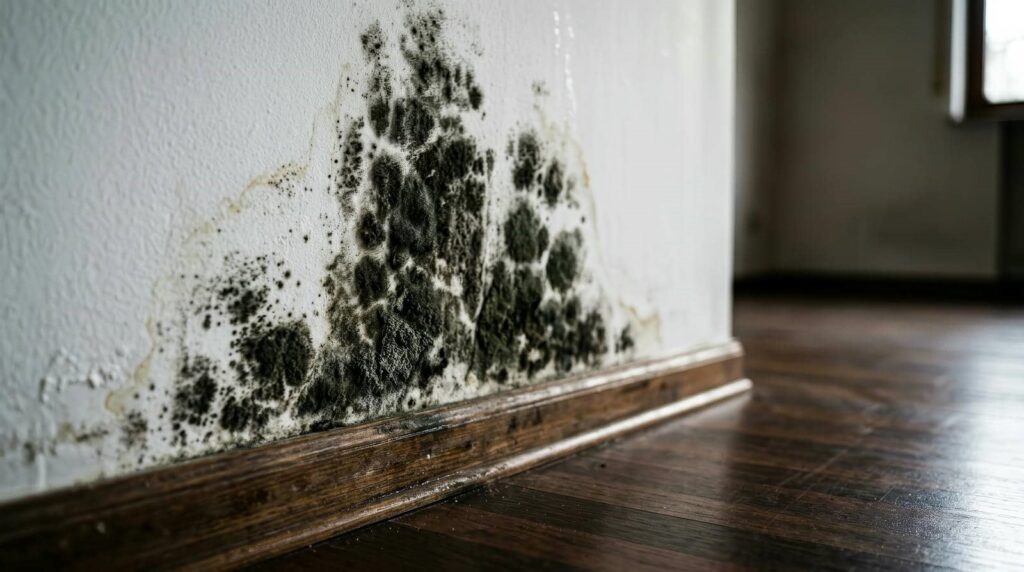
When water lingers, mold doesn’t wait long to move in. You’ll need to cut power to the wet area, dry everything fast with fans and dehumidifiers, and clean hard surfaces with detergent before they’re sealed up by spores. Anything porous that stays saturated may need to go. The tricky part is knowing what’s hidden in walls and when the damage is beyond a DIY fix.
Key Takeaways
- Act quickly: stop the leak, cut power if needed, and dry affected areas with fans and dehumidifiers.
- Inspect for hidden mold in walls, corners, baseboards, and cavities using a flashlight and moisture meter.
- Wear gloves, an N95 mask, and eye protection, then clean nonporous surfaces with detergent and dry them completely.
- Remove and discard porous materials like wet drywall, insulation, carpet padding, and moldy mattresses.
- For large or hidden mold problems, use a certified remediation team that isolates the area and performs clearance testing.
Stop Mold Growth Fast
The faster you act after water damage, the better your chances of stopping mold before it spreads. You should cut power to affected areas, remove wet materials, and start rapid drying with fans and dehumidifiers. Open windows only if outdoor humidity is low.
Clean hard surfaces with a detergent solution, then dry them completely. Build a disciplined routine: inspect hidden spaces, keep indoor humidity below 60%, and replace soaked insulation or drywall that can’t be salvaged.
Use preventative measures like sealing leaks and improving ventilation so your space stays protected. If you work methodically, you’ll help your home recover faster and stay part of a safer, healthier environment.
Keep cleanup gear separate, and wash your hands after every task.
How to Tell If Mold Is Spreading?
Once you’ve started drying and cleaning, you need to check whether mold is still spreading. Inspect nearby walls, baseboards, and hidden corners for new discoloration, musty odor, or fuzzy patches.
These mold growth indicators often appear first at damp edges, behind furniture, and around HVAC vents. Use mold detection techniques such as a moisture meter, flashlight inspection, and daily photo comparisons to spot changes over time.
If stains expand, surfaces stay damp, or the smell intensifies, moisture is still feeding growth. Keep notes so you can track what’s changing and feel confident you’re catching problems early.
When you stay organized and alert, you’re protecting your home and joining the group of owners who respond before mold takes hold again.
Remove Mold Safely From Surfaces
Start by cleaning only surfaces you can safely reach, and wear gloves, an N95 mask, and eye protection before you begin.
Ventilate the area, then test a small spot with safe cleaning products before you scrub.
Use mold removal techniques that match the surface: damp-wipe nonporous materials with detergent and water, then dry them completely; for harder buildup, apply a manufacturer-approved cleaner and agitate with a stiff brush.
Rinse clean, then dry fast with fans or dehumidifiers to limit regrowth.
Keep your motions controlled so you don’t spread spores into nearby rooms.
If you work methodically, you protect your space and help your household recover together.
Discard your cloths or launder them hot after use, and wash your hands before touching clean areas.
What to Throw Away After Water Damage
After water damage, you should discard porous materials that stay wet or show mold, such as drywall, insulation, carpet padding, and upholstered items.
You should also throw away contaminated belongings that can’t be fully cleaned and dried, including paper goods, mattresses, and heavily affected personal items.
If an item’s core material has absorbed water or mold, it usually won’t be safe to keep.
Porous Materials
When water soaks into porous materials, you usually can’t dry them thoroughly enough to make them safe again, so you should remove and discard anything that holds moisture deep inside. This includes drywall, ceiling tiles, insulation, particleboard, carpet padding, and upholstered foam.
Even if the surface looks dry, hidden dampness can support mold growth and spread spores through your space. For effective mold prevention strategies, act fast and keep the work area contained while you strip out damaged sections.
Don’t rely on porous material treatment once saturation has reached the core; replacement is safer and more reliable.
As you clean up, sort salvageable hard materials separately, wear protective gear, and keep airflow moving. That helps your home recover faster and keeps your household protected.
Contaminated Belongings
Discard any belongings that soaked up contaminated floodwater or show visible mold growth, strong musty odors, or stubborn staining that you can’t remove.
You should also throw out contaminated furniture with upholstered padding, particleboard, or hidden cavities, because these materials trap moisture and spores.
Bag and remove damaged personal belongings such as mattresses, pillows, paper goods, fabrics, and items with absorbent foam.
If an object is nonporous, clean it with detergent, disinfect it, and dry it completely; otherwise, discard it.
Wear gloves, a respirator, and eye protection when handling waste.
Keep salvageable items separate from trash to prevent cross-contamination and preserve anything clean you still value.
After removal, clean the area thoroughly and monitor for recurring odor or growth.
Find Hidden Mold in Walls and Floors
You’ll need to inspect wall cavities and floor joists for trapped moisture, because mold often grows out of sight after water damage.
Check for hidden moisture signs such as staining, soft drywall, warped flooring, musty odor, or cool damp areas.
If you find any of these indicators, open the affected section and verify the extent of contamination before you clean or replace materials.
Wall Cavities
Open wall cavities and floor voids can hide mold long after the visible damage looks dry. You should inspect behind trim, outlets, and access panels, because trapped moisture keeps feeding growth.
Remove a small section of drywall and check wall insulation and moisture barriers for staining, odor, or dampness. If you find condensation, dry the cavity with airflow and dehumidification before repairs. Treat porous materials that stayed wet as contaminated and replace them.
- Probe for soft, discolored insulation
- Check seams in moisture barriers
- Verify framing is dry to the touch
- Use a meter to confirm low moisture
- Seal openings only after cleanup is complete
You’re not just fixing damage; you’re restoring a safe space for everyone in your home.
Floor Joists
After checking wall cavities, inspect the floor joists below for concealed mold, because water can wick into framing and stay trapped in dark, unventilated spaces.
You should use a flashlight, gloves, and a moisture meter during each joist inspection. Look for discoloration, fuzzy growth, soft wood fibers, and a musty odor around penetrations, subfloor seams, and support points.
If you find suspect areas, mark them, photograph them, and trace the moisture source before cleaning or removing materials.
Keep the space dry with ventilation and dehumidification, and replace any compromised insulation nearby.
This step supports mold prevention by catching hidden growth early, before it spreads to adjacent framing.
Hidden Moisture Signs
Even when surfaces look dry, hidden moisture often lingers inside wall cavities and under flooring, where mold can grow unnoticed. You can spot hidden sources by checking baseboards, trim, and floor seams for swelling, staining, or a musty odor.
Use moisture detection tools to compare readings on affected and unaffected areas, especially near plumbing, exterior walls, and door thresholds. If drywall feels soft or sounds hollow, moisture may be trapped behind it.
- Watch for cupped flooring
- Check paint for bubbling
- Inspect grout for dark lines
- Feel for cool, damp spots
- Trace leaks to hidden sources
You belong to the group that catches problems early, so document findings and dry affected spaces fast.
When to Call a Mold Pro
If mold covers a large area, keeps returning, or spreads into HVAC, drywall, or insulation, you should call a mold remediation professional.
You need a mold inspection when the source isn’t obvious, the smell persists, or moisture readings stay high after drying. A pro can map contamination, test affected materials, and define a safe removal plan before you reopen rooms.
This matters if anyone in your home has allergies, asthma, or immune concerns, because health risks rise when spores spread during cleanup. You’ll protect your household and avoid hidden damage by acting early.
Choose a certified team that isolates the work zone, uses negative air pressure, and documents clearance testing. That way, you stay informed, supported, and confident in the recovery process.
Frequently Asked Questions
Can Mold Return After a Surface Looks Clean?
Yes, mold can return even when a surface looks clean. If you don’t stop mold spores and maintain moisture control, hidden growth can rebound. You should dry materials fully and inspect porous areas carefully.
How Long Does It Take for Mold to Start Growing?
You’ll usually see mold growth timeline begin within 24 to 48 hours after moisture exposure. Act fast, dry materials completely, and practice water damage prevention to protect your space and keep your home’s indoor environment safer.
Does Bleach Kill Mold in Drywall?
No—bleach won’t reliably kill mold in drywall; it can seem like a miracle, but you’ll mostly wet the surface. You’ll need proper drywall treatment, identify mold types, remove damaged material, and dry thoroughly.
Can I Stay in My Home During Mold Cleanup?
You can stay, but only if cleanup is small, isolated, and contained. Monitor air quality, avoid affected rooms, and watch for mold symptoms. If you’re sensitive, leave until drying, filtration, and removal are complete.
Will Insurance Cover Mold Removal After Flooding?
Usually, yes, but your policy governs coverage. You’ll need insurance policy details to confirm flood exclusions, deductibles, and mold limits. Review mold prevention tips, document damage, and file fast—stormwater can turn into a nightmare.
Review
Act fast, cut power, and dry the area before mold can spread. Inspect surfaces, monitor for new growth, and clean hard materials with detergent and thorough drying. Remove porous items that stay wet, and check walls and floors for hidden damage. Wear protective gear, ventilate the space, and, when the job is bigger than you can safely handle, call a certified mold remediation pro to isolate, remove, and verify cleanup.