
Like a leak that starts as a whisper and ends as a flood, water damage demands quick action if you want to limit loss. You need to stop the source, remove standing water, and document every affected area for insurance. Then you assess materials, humidity, and mold risk before cleanup begins. The right restoration process depends on contamination, extent of damage, and how fast you act—details that can change everything.
Key Takeaways
- Act quickly by stopping the water source, protecting valuables, and improving airflow if it is safe to do so.
- Assess the damage, identify the water source, and document affected areas before cleanup begins.
- Remove standing water rapidly and dry carpets, subfloors, walls, and wall voids with appropriate extraction methods.
- Check electrical safety, shut off power in wet areas, and isolate damaged rooms to prevent further spread.
- Watch for mold signs like musty odors, discoloration, or damp materials that stay wet after cleanup.
Stop Water Damage Fast Before It Spreads
The faster you act, the less damage water can do. You should shut off the source, if you can reach it safely, and protect your space with preventive measures that limit spread.
Move furniture, electronics, and valuables away from wet areas. If water is near outlets or breakers, don’t touch them; call an electrician or your utility provider.
Open doors and windows for airflow, but only if outside conditions help. Use towels or mops to contain moisture at entry points, and place barriers at thresholds.
Document the affected areas for your records. A prompt emergency response helps you stay in control and reduces the chance of mold, structural weakening, and costly repairs.
Act quickly, stay calm, and keep your home safe.
What Happens During Water Damage Restoration
During water damage restoration, professionals inspect the affected areas, identify the water source, and classify the contamination level to determine the right cleanup method. You’ll see them document water damage causes, map moisture migration, and select restoration techniques that match your structure’s needs.
- They remove unsalvageable materials.
- They protect unaffected rooms.
- They apply antimicrobial treatment when needed.
- They monitor humidity and surface moisture.
- They verify drying targets with meters.
You stay informed through each step, so you know what’s happening and why. The process aims to stabilize your space, limit structural deterioration, and reduce hidden risks.
What Water Removal Covers
Water removal covers the rapid extraction of standing water and trapped moisture from floors, walls, cavities, and contents to stop further damage.
You’ll see technicians use water extraction methods matched to the material and saturation level, so your space gets targeted treatment instead of guesswork. They may remove water from carpet backing, subfloor seams, wall voids, and structural openings while checking for hidden pockets that keep spreading damage.
Flood damage assessments guide this work by identifying affected areas, measuring moisture, and ranking what needs immediate attention. This keeps your property in the recovery path with people who understand what your home’s going through.
How Flooded House Cleanup Starts
Once the water is removed, cleanup starts with a room-by-room safety check so technicians can spot electrical risks, structural instability, and contaminated materials before work moves forward.
You’ll see a thorough flood assessment that maps damage, documents conditions, and sets the cleanup plan. Your crew then follows strict safety precautions to protect you and the property.
- Shut off power in affected zones.
- Mark unstable flooring and ceilings.
- Remove saturated debris and salvageable items.
- Measure moisture in walls, subfloors, and framing.
- Isolate affected rooms to limit spread.
This method helps your team work efficiently and keeps you informed at every step.
You’re not left guessing; you’re part of a structured process built to restore your home safely and consistently.
When Mold Remediation Is Needed
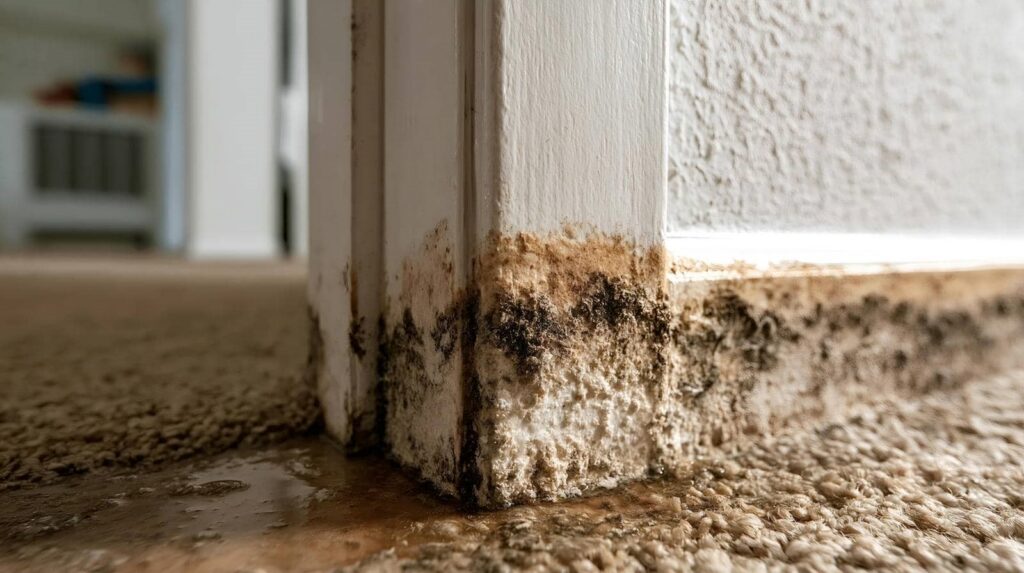
You should suspect mold remediation when you see visible growth, musty odors, discoloration, or recurring damp spots after water damage.
These signs indicate moisture has persisted long enough for mold to colonize materials and spread beyond the surface.
Act quickly once you detect them, because delayed response can increase contamination and repair scope.
Signs of Mold Growth
How can you tell when moisture has triggered a mold problem that needs professional remediation? You’ll usually notice persistent damp odors, visible discoloration, and materials that stay wet after cleanup.
In your home, these signs often mean hidden colonies are growing behind walls or under flooring, where they can spread fast and compromise mold prevention.
- Fuzzy or slimy patches on drywall
- Black, green, or white spotting on surfaces
- Warped baseboards or peeling paint
- Condensation near vents or windows
- Recurring allergy-like health risks indoors
When you see several of these indicators together, your space likely needs expert evaluation.
That helps protect your household, supports a healthier environment, and keeps your restoration plan grounded in reliable, technical assessment.
When To Act
Mold remediation should begin as soon as you confirm ongoing moisture or notice growth that keeps returning after drying efforts.
You need emergency response when water has soaked porous materials, HVAC components, or hidden cavities for more than 24 to 48 hours. Don’t wait for visible spreading; act when musty odor, staining, or respiratory irritation persists after cleanup.
If you’ve had sewage, floodwater, or repeated leaks, professional containment and removal protect your home and the people in it. You can’t rely on surface cleaning alone when colonization reaches drywall, insulation, or subflooring.
Follow prevention tips by correcting leaks, lowering indoor humidity, and verifying complete drying with meters. Fast action keeps your space healthier, reduces repair costs, and helps your household stay safe together.
How to Choose a Water Damage Restoration Company
Selecting the right water damage restoration company starts with verifying fast response times, proper licensing, and proven experience with drying, structural cleanup, and contamination control.
You should compare cost considerations alongside service reviews so you can choose a team that protects your property and fits your budget. Look for clear estimates, 24/7 dispatch, and certified technicians who use moisture meters, dehumidifiers, and antimicrobial treatments.
- Confirm emergency availability
- Check insurance coordination
- Review drying equipment
- Ask about mold prevention
- Verify written warranties
When you choose a qualified provider, you’re not just hiring labor; you’re joining a process built to restore your space safely and efficiently.
Prioritize communication, documentation, and transparent scope, and you’ll feel confident throughout recovery.
Frequently Asked Questions
How Long Does Water Damage Restoration Usually Take?
Usually, you’ll see water damage restoration take 3–7 days for minor issues, but larger losses can take weeks. Your water damage assessment determines the restoration timeline, so you’ll know what’s next and stay informed.
Is Water Damage Restoration Covered by Homeowners Insurance?
Usually, yes—if you’ve got the right insurance policy and the damage was sudden and accidental. You’ll need to verify coverage limits, because gradual leaks often aren’t covered, and you’re not alone managing claims.
Can I Stay in My Home During Restoration?
You can sometimes stay in your home during restoration, but you’ll need safety precautions and clear access for the restoration process. If water damage affects wiring, mold, or structural areas, you’ll likely need to leave temporarily.
What Items Can Be Saved After Water Damage?
You can save salvageable items like hard furniture, metal fixtures, and sealed plastics if you act fast. Professional restoration techniques can dry, clean, and disinfect them, while porous materials, electronics, and contaminated items usually can’t be salvaged.
How Much Does Water Damage Restoration Cost?
You’ll usually pay $1,000–$4,000, because flooding kindly ignores budgets. Your cost factors include water category, damage extent, and drying time. DIY restoration may save cash, but you’ll risk hidden mold, structural loss, and isolation.
Wrap-Up
When water strikes, you need to act like a dam closing against a rising river. Stop the source, document the damage, and remove standing water before it spreads deeper into your structure. Then dry, clean, and monitor for mold, because hidden moisture can become a costly storm inside your walls. If the damage is extensive or contaminated, call a qualified restoration company fast so you can protect your property and health.