
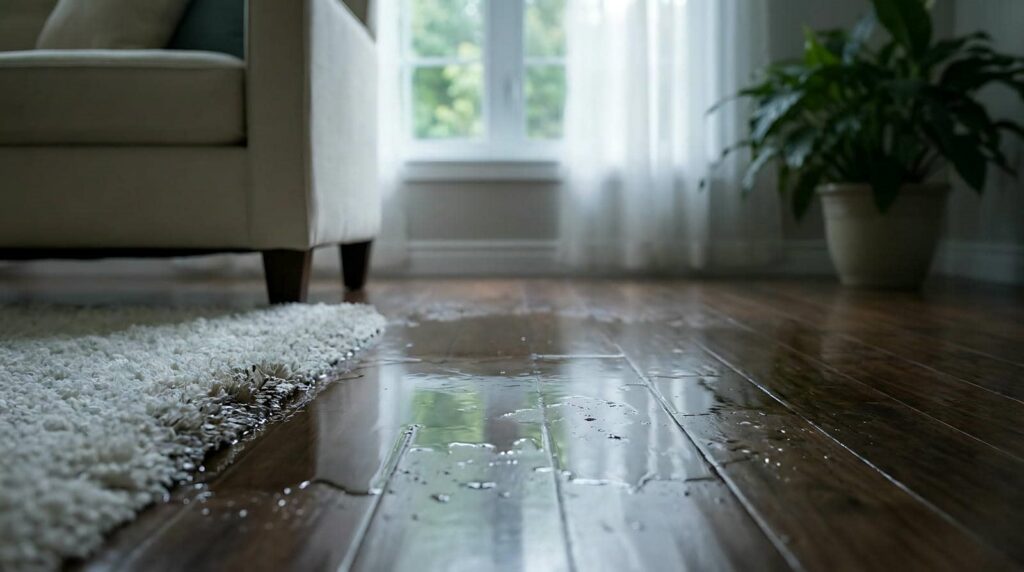
After a burst pipe soaks your basement floor, you need to act fast. You shut off the water, pull out standing water with a wet/dry vacuum, then dry walls, floors, and belongings with fans and dehumidifiers. But the job isn’t done until you check hidden moisture and stop mold before it starts.
Key Takeaways
- Shut off the water source immediately if safe, then remove standing water with towels, a wet/dry vac, or a pump.
- Document the damage with photos and check for leaks in supply lines, valves, fixtures, and joints.
- Dry affected areas quickly using fans, dehumidifiers, and open windows if weather allows.
- Move rugs, furniture, and personal items to a dry area to limit moisture spread and improve airflow.
- Prevent mold by drying everything within 24 to 48 hours and replacing soaked insulation, drywall, or carpet padding.
Stop the Leak and Remove Standing Water
First, shut off the source of the water if you can do so safely. Then, remove as much standing water as possible with a wet/dry vacuum, mop, or pump.
Next, perform quick leak detection by checking supply lines, valves, fixtures, and visible joints for active drips or spray. If the leak continues, shut off the main supply and contact a plumber or building pro.
You’re part of a team that protects the space, so document the source and severity with photos if you can. Move items away from the wet area to keep access clear.
Don’t use electrical equipment near pooled water. Use towels to trap runoff at thresholds. Your goal is to stop added moisture fast, limit spread, and create a safe, controlled cleanup zone.
Dry Water-Damaged Walls, Floors, and Personal Items
Once the leak is stopped and standing water is gone, start drying the affected surfaces right away. Open windows if weather helps, run fans, and set up dehumidifier use to pull moisture from the air.
You should move rugs, cushions, and other personal items to a dry room, then blot or wipe them with clean towels.
For walls, remove baseboards and drill small holes only if you need airflow inside cavities.
For floors, lift wet mats and mop up trapped moisture along seams. Use drying techniques that keep air moving across every damp surface.
Check moisture often with your hand or a meter, and keep working until walls, floors, and belongings feel fully dry. Your quick action protects everyone in your home.
Prevent Mold After Cleanup
After cleanup, keep mold from taking hold by removing any remaining dampness within 24 to 48 hours.
You can protect your space with disciplined mold prevention steps that stop spores from settling into damp materials. Run dehumidifiers, open windows if weather allows, and maintain steady air circulation with fans positioned to move moisture outward.
Check hidden spots like baseboards, wall cavities, and under cabinets, because mold often starts where you don’t see it. If surfaces still feel cool or damp, keep drying.
- Inspect daily for odor, discoloration, or soft spots
- Replace soaked insulation, drywall, or carpet padding
- Clean hard surfaces with approved disinfectant and dry fully
When you act quickly, you help your home stay healthy, safe, and part of your resilient community.
Frequently Asked Questions
How Quickly Should I Call My Insurance Company After Water Damage?
Call your insurance company immediately, ideally within 24 hours, to start the insurance claim process. A fast water damage timeline helps protect evidence, reduce losses, and keep you connected with your insurer’s support.
Can I Safely Use Household Fans for Wet Carpet Drying?
Yes, you can use household fans for wet carpet drying if you ensure fan safety: keep cords dry, elevate units, and monitor constantly. You’ll improve drying efficiency when you combine airflow with dehumidification and ventilation.
What Documents Should I Photograph Before Cleanup Begins?
Photograph your insurance policy, property photos, receipts, serial numbers, and the entire damage assessment before you move anything. You’ll document losses clearly, support your claim, and stay connected to trusted help during cleanup.
When Should I Hire a Professional Water Damage Restoration Service?
Hire a professional fast if water’s above ankle depth—like a basement flood where one inch can spread unseen. You’ll need water extraction within 24 hours for mold prevention, structural drying, and safe restoration.
Are There Signs of Structural Damage I Can Check Myself?
Yes—you can check for visible cracks, warped walls, sagging ceilings, sticking doors, and uneven floors. You’ll spot early structural distress by inspecting load-bearing areas, but if damage seems extensive, you should call a professional immediately.
Recap
In the end, you’ll keep the situation from becoming a bigger headache by acting fast. Shut off the source, clear away any lingering water, and give walls, floors, and belongings a thorough dry-out. Then keep an eye on hidden spots so no unwanted guests, like mold, settle in. With steady ventilation, dehumidifiers, and careful checks, you’ll help your space return to normal and stay that way.