
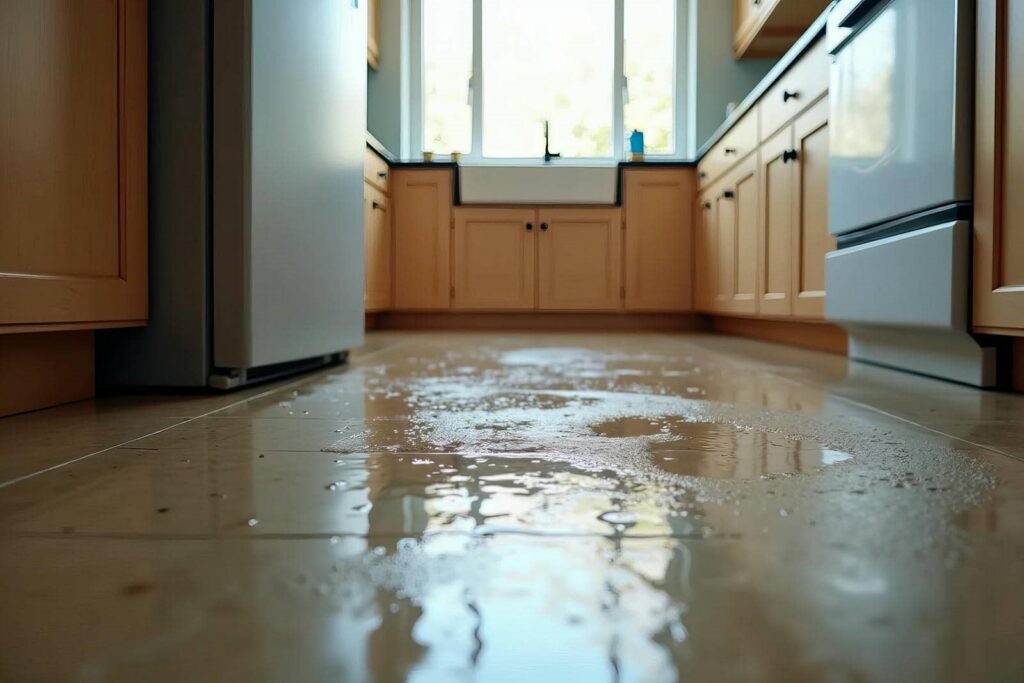
Many homeowners face water damage at some point, and the first hour often decides how much you’ll lose. You need to stop the source, cut power safely, and remove standing water fast. Then dry carpets, floors, and walls before moisture spreads behind surfaces. Mold can start in as little as 24 hours, so timing matters—and knowing when to call a restoration company can save more than the cleanup.
Key Takeaways
- Shut off the water source and cut electricity to the affected area immediately.
- Remove standing water fast with a wet/dry vacuum, pump, mop, or towels.
- Use fans, dehumidifiers, and HVAC to dry carpets, floors, walls, and hidden areas.
- Lift carpet edges and remove baseboards to improve airflow and speed drying.
- Call a water damage restoration company if damage is widespread or cannot dry within 24–48 hours.
Stop the Water Source and Cut Power Safely
First, shut off the water at the main valve or the nearest supply line to stop additional damage. Then turn off electricity to the affected area from the breaker panel if you can reach it without standing in water.
You should identify leak sources fast: check supply hoses, shutoff valves, toilet seals, appliance lines, and visible pipe joints. If the source isn’t obvious, trace damp paths to the highest wet point.
Next, assess damage severity by noting how far moisture has spread, whether walls feel soft, and whether flooring has lifted. Keep people out of unsafe rooms and wear insulated footwear if you must enter.
If water is near outlets, call a licensed electrician before you restore power. Acting quickly helps you protect your space and stay in control.
Remove Standing Water Quickly
Once the area is safe, remove standing water as fast as you can with a wet/dry vacuum, pump, mop, or towels, working from the edges toward the center so you don’t spread it.
Use water extraction techniques that match the surface: vacuum for hard floors, pump for deep pooling, and absorbent towels for tight spots.
Keep your emergency tools within reach so you can move room to room without delay. Empty containers often and check hidden low points, like under furniture and along baseboards.
You’re not just cleaning; you’re limiting damage and protecting your space. If you work methodically and stay steady, you’ll help your home recover faster and avoid giving moisture extra time to sink in.
Dry Carpets, Floors, and Walls Thoroughly
Run fans, dehumidifiers, and HVAC blowers right away to pull moisture from carpets, floors, and walls.
Lift carpet edges so air reaches the padding, and keep carpet drying equipment aimed across the surface, not straight down.
Remove baseboards if you can, then open cavities for wall ventilation and faster evaporation.
For wood, tile, or laminate, wipe trapped water from seams and under furniture legs, then maintain airflow until surfaces feel dry and cool, not damp.
Check hidden zones behind furniture, inside closets, and under rugs, because moisture lingers there.
Rotate equipment as rooms equalize, and keep doors open to help air move.
You’re not doing this alone; with steady drying, you protect your space and get your home back on track.
Prevent Mold After Water Damage Cleanup
After the area is dry, treat mold prevention as the next priority. You should remove any damp drywall, insulation, or carpet padding that stayed wet longer than 24 to 48 hours.
Clean hard surfaces with a detergent solution, then dry them again with fans and dehumidifiers. Keep humidity control tight; aim for indoor humidity below 60% so spores can’t settle and grow.
Check hidden spaces like baseboards, closets, and under sinks because moisture lingers there. Use exhaust fans in bathrooms and kitchens, and let fresh air circulate when weather allows.
Replace HVAC filters if they got wet, and monitor for musty odors or discoloration. Acting quickly helps you protect your home and keep your space healthy for everyone inside.
When to Call a Water Damage Restoration Company
Call a water damage restoration company when the damage is widespread, the source is contaminated, or you can’t dry the structure within 24 to 48 hours.
You’ll protect your home, your crew of helpers, and your peace of mind by acting fast. Certified technicians use moisture meters, air movers, dehumidifiers, and antimicrobial treatments to stop hidden damage.
If sewage, floodwater, or ceiling collapse is involved, request emergency services right away. Their documentation also helps with insurance claims, since adjusters need photos, moisture readings, and a clear mitigation timeline.
If you smell musty odors, see warped materials, or notice electrical risk, don’t wait. Calling early gives you support, reduces repair costs, and gets your space back to safe, usable condition sooner.
Frequently Asked Questions
How Can I Document Water Damage for Insurance Claims?
You can document water damage by photographing all affected areas, listing damaged items, noting dates, and preserving receipts. Include a damage assessment for the claim process, and keep copies with your insurer’s records.
What Household Items Should Be Discarded After Flooding?
You should discard porous items, food, medicines, cosmetics, and any soaked textiles. Toss drywall, insulation, and contaminated electronics if mold growth or hazardous materials are present. Keep sealed metal, glass, and hard plastics only.
How Do I Protect Valuables Before Cleanup Begins?
You’ll protect valuables by moving them to sealed valuables storage, then documenting damage and calling emergency contacts. Treat cleanup like a chessboard: act fast, isolate items, elevate paperwork, and avoid further water exposure.
Can I Use Fans Safely Around Wet Electrical Outlets?
No—you shouldn’t use fans near wet electrical outlets until outlet inspection confirms they’re dry and safe. Prioritize fan safety by shutting power off, keeping distance, and calling a licensed electrician if you see moisture or damage.
What Signs Indicate Hidden Water Damage Inside Walls?
You’ll notice subtle swelling, staining, musty odors, and soft drywall. Use moisture detection tools; hidden mold growth often follows. If your wall feels cool or sounds hollow, you should investigate quickly with peers nearby.
Final Thoughts
You’ve already learned the drill: stop the source, kill power safely, and suck up standing water before it turns your home into a science experiment. Dry carpets, floors, and walls fast, then keep humidity low so mold doesn’t move in rent-free. If the damage is more than a mop and a prayer can handle, call a restoration company. Quick action won’t make the mess glamorous, but it’ll keep the situation from getting weirder.