
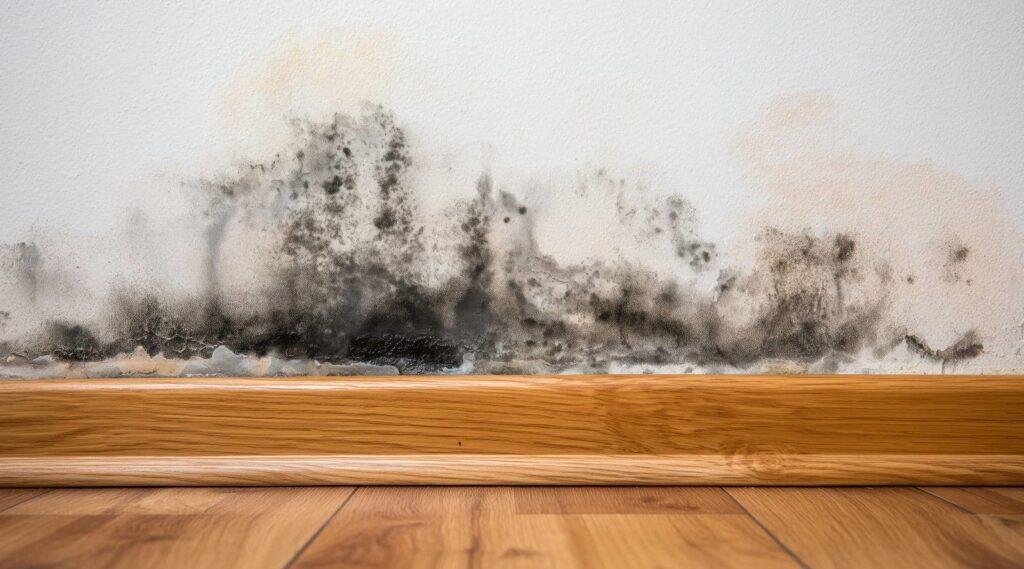
You prevent mold after water damage by acting fast and controlling moisture. You need to remove standing water within 24 to 48 hours, dry hidden wet materials, and keep humidity below 60%. Use air movers, dehumidifiers, and disinfectant on exposed surfaces. Discard porous items that can’t dry fully. Even then, mold can still develop in concealed areas, and that’s where the real risk starts.
Key Takeaways
- Remove standing water and extract moisture within 24–48 hours.
- Dry affected areas quickly with fans, dehumidifiers, and open windows.
- Keep indoor humidity below 60% using a hygrometer to monitor levels.
- Remove and discard porous materials like wet carpet pad, insulation, or drywall.
- Clean, disinfect, and inspect hidden spaces for trapped moisture or early mold signs.
Stop Mold After Water Damage
Act quickly to stop mold after water damage, because mold can begin growing within 24 to 48 hours in damp materials.
You need to remove soaked items, then clean and dry all affected surfaces. Open windows, run fans, and use dehumidifiers to lower indoor humidity below 60%.
Check hidden areas like baseboards, wall cavities, and under flooring, since trapped moisture can drive mold growth. Discard porous materials that stay wet, such as insulation, carpet pad, and ceiling tiles.
Clean hard surfaces with detergent and dry them completely. Wear gloves, eye protection, and an N95 respirator if you disturb contaminated debris.
These mold prevention steps help you protect your space and restore a safe, healthy place after water damage.
Why Fast Water Extraction Matters
When you extract water quickly, you reduce the time materials stay saturated and lower the chance of hidden moisture spreading.
Fast removal also limits the conditions mold needs to begin colonizing porous surfaces.
You should treat every hour of delay as added risk to drying performance and mold control.
Rapid Moisture Removal
Within the first 24 to 48 hours after water intrusion, you need to remove standing water and trapped moisture fast, because mold can begin colonizing damp materials very quickly.
You should deploy extraction techniques that match the affected surface: pump, wet vac, or truck-mounted equipment for bulk water, then use air movement and dehumidification to finish the job.
Open cavities, lift baseboards, and inspect hidden pockets where water lingers. If your building includes moisture barriers, verify they’re intact; damaged barriers can trap vapor and slow drying.
You’ll protect drywall, flooring, and framing best by reducing moisture content below the level mold needs to establish. Fast, methodical removal helps you stay ahead of contamination and keeps your space safer for everyone who shares it.
Limiting Mold Growth
Fast water extraction limits mold growth by cutting off the moisture mold needs to germinate and spread.
You protect your space best when you pair extraction with preventive measures that dry building materials fast. Use mold inhibitors on exposed surfaces, then verify environmental control with dehumidifiers and airflow management.
Replace porous items if saturation persists; they can hold spores. Install water barriers where leaks recur, and apply surface treatments after cleaning to reduce recontamination.
- Inspect hidden cavities early
- Track humidity below 60%
- Dry framing, drywall, and insulation
- Update maintenance routines after each event
- Coordinate repairs with your team
Dry Moisture Hidden in Walls
Even after visible water is gone, moisture can remain trapped inside wall cavities, insulation, and framing. You may feel the room is dry, but hidden moisture can still feed mold behind paint and drywall.
Use wall inspections to check baseboards, outlet openings, trim seams, and any soft or stained areas. A moisture meter helps you verify readings instead of guessing.
If you hear crumbling drywall, smell a musty odor, or see bubbling paint, open the wall only where needed and remove wet materials. You’re not overreacting; you’re protecting your space and everyone in it.
Keep the affected area isolated during drying, and document each inspection so you know which walls still need attention and which are safe to close up.
Lower Humidity Before Mold Grows
Lower the indoor humidity immediately after water damage, because mold can start growing once damp conditions persist.
Use a dehumidifier fast and size it for the affected space so it removes moisture efficiently.
Keep air moving with fans and open pathways to speed evaporation and prevent stagnant, humid pockets.
Dehumidify Fast
Get dehumidifiers running as soon as you can to pull moisture out of the air and slow mold growth. Set dehumidifier settings to maintain indoor humidity near 60% or lower, and check the reservoir or drain line often so performance doesn’t drop. You’re protecting your space and helping everyone in it feel safer and more in control.
Target basements, bathrooms, and any damp rooms first.
Measure humidity with a hygrometer, not guesswork.
Match unit capacity to the room size and damage level.
Empty or drain units continuously for steady moisture control.
Log readings to verify drying progress and catch rebounds early.
When you act quickly, you reduce the window mold needs to establish colonies and spread.
Keep Air Moving
Keep air moving with fans and open pathways so damp air doesn’t sit long enough for mold to take hold.
You should create steady air circulation across wet floors, baseboards, and hidden corners, because stagnant pockets trap moisture. Aim fans at surfaces, not just into the room, and keep interior doors open to connect spaces.
Use ventilation strategies such as exhaust fans, cracked windows when outdoor air is dry, and HVAC settings that support drying. You’ll help the structure recover faster when you move air through closets, under sinks, and behind furniture.
Check humidity with a meter and keep it below 60%, ideally near 50%. If you’re working with your cleanup team, coordinate fan placement so everyone supports the same drying pattern.
Clean and Disinfect Wet Surfaces
Wipe away standing water and scrub all wet surfaces with soap and clean water as soon as it’s safe to enter the area.
Your surface cleaning should target walls, floors, trim, and fixtures so mold can’t gain a foothold. After washing, apply approved disinfecting agents exactly as labeled, and keep the contact time the product requires.
Use clean cloths, fresh water, and separate tools for dirty zones to avoid spreading contaminants. Work methodically so your team can trust the results and stay aligned.
- Clean from top to bottom.
- Rinse after washing.
- Follow label directions.
- Ventilate the space.
- Recheck all touched surfaces.
Remove Soaked Materials You Can’t Save
Triage soaked materials quickly and remove anything that won’t dry within 24 to 48 hours, since prolonged saturation gives mold a head start.
You should pull out carpet pad, drywall, insulation, ceiling tiles, and upholstered items that stay wet and show swelling, staining, or odor.
During your damage assessment, separate salvageable items from porous materials that can’t be reliably cleaned.
Bag debris before carrying it through clean areas so you don’t spread spores.
If framing or subflooring is exposed, check whether mold resistant materials are already present and note where replacement is smarter than repair.
Remove contents with care, document what you discard, and keep the site organized.
When you act fast, you protect your home, your crew, and everyone who depends on your space.
Use Air Movers and Dehumidifiers
Once you’ve removed unsalvageable materials, use air movers and dehumidifiers to pull moisture out of the structure as quickly as possible.
Place air movers to create steady airflow across floors, walls, and hidden cavities, but don’t aim them directly at one spot. Run dehumidifiers in the same closed area so they can collect vapor efficiently and support moisture control.
Keep doors and windows shut unless equipment setup requires otherwise. Check condensate tanks or drain lines often, and clear filters so the units keep working at full capacity.
Good setup protects air quality and helps your crew move together toward a dry, stable space.
- Space equipment for even coverage
- Keep pathways clear for airflow
- Maintain continuous operation
- Empty or drain units promptly
- Verify humidity drops steadily
Watch for Mold Signs After Water Damage
As the structure dries, keep checking for mold signs so you can catch growth before it spreads. Inspect drywall, baseboards, insulation, and hidden corners for discoloration, fuzz, staining, or musty odor.
You should document each area with photos and dates to support mold identification and track changes over time. Pay close attention to condensation, peeling paint, warped materials, and damp insulation, since these conditions often signal active growth.
If you notice worsening smell or spots after cleaning, reassess moisture control immediately. You and your household deserve a safe, healthy space, so treat any suspicious area seriously.
Ignoring early signs can increase health risks, especially for people with allergies, asthma, or weakened immune systems.
When to Call Mold Remediation Experts
Call mold remediation experts when the affected area is large, the growth keeps returning, or the source of moisture isn’t fully controlled. You need a mold inspection if you notice hidden staining, musty odors, or damp materials behind walls.
They verify the contamination scope with tools.
They isolate affected rooms to protect your household.
They remove porous materials that can’t be cleaned.
They dry structures to target moisture levels.
They recommend prevention strategies that fit your home.
Call sooner if anyone has asthma, allergies, or immune risk, because exposure can escalate quickly. A qualified team helps you regain control, reduce spread, and restore a safer shared space.
Their process also documents findings, so you can make informed repairs and avoid repeat damage.
Frequently Asked Questions
How Long Does Mold Take to Grow After Water Damage?
Mold can start growing within 24 to 48 hours after water damage, depending on moisture retention and materials. You’ll slow the mold growth timeline by drying surfaces fast, removing wet materials, and controlling humidity.
Can Clean Water Still Cause Mold Growth?
Yes, clean water can still cause mold growth if you leave materials wet. You’ll need to dry surfaces quickly, control moisture levels, and use prevention methods because mold spores can colonize even uncontaminated water.
Does Insurance Cover Mold Prevention After Water Damage?
Usually, your insurance policies cover mold prevention only if the water damage itself is covered; for example, a burst pipe may qualify, but delayed maintenance often won’t. Check exclusions, document cleanup, and file claims promptly.
Should I Test for Mold After a Flood?
Yes—test for mold after a flood, especially if you notice odors or damp materials. Mold testing supports flood recovery, verifies air quality, and guides post flood inspections, helping you protect your space and community.
Can HVAC Systems Spread Mold After Water Damage?
Yes, your HVAC system can spread mold after water damage if it runs while contaminated. You should shut it down, replace air filters, and schedule HVAC maintenance to clean ducts, coils, and drainage.
Conclusion
You can stop mold after water damage by acting fast, like cutting off a fire before it reaches the rafters. Extract water within 24 to 48 hours, dry hidden moisture in walls, and keep humidity below 60% with dehumidifiers and airflow. Clean wet surfaces, discard unsalvageable porous materials, and check for mold daily. If odors, stains, or spread appear, call remediation experts right away to protect your structure and your health.