
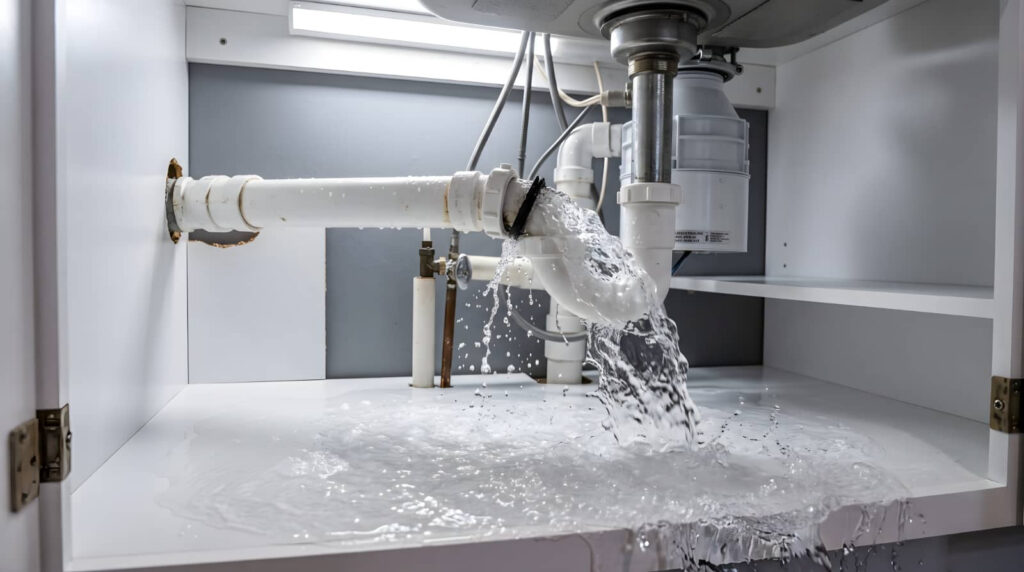
Nearly 1 in 4 burst pipe losses lead to hidden moisture damage if you don’t act fast. You need to shut off the main supply, make the area safe, and pull standing water before it spreads into carpets, walls, and cabinets. The first hour matters most, because what you can’t see often causes the real repair bill—and the next step can make the difference.
Key Takeaways
- Shut off the main water supply immediately and, if safe, turn off power to affected areas.
- Remove standing water quickly with pumps, wet vacs, or extractors, starting at the lowest point.
- Lift carpet edges and extract saturated padding to prevent hidden moisture from spreading.
- Inspect daily for mold, musty odors, and damaged drywall, baseboards, or swollen materials.
- Call professional water extraction services and document damage for insurance claims.
Stop the Leak and Shut Off Water
Act quickly to stop the leak and shut off the main water supply. You should find the closest valve, then close it fully to reduce flow.
Use leak detection to locate the exact failure point, checking joints, bends, and frozen sections. If you can reach the pipe safely, tighten fittings or apply a temporary clamp until repairs start.
Next, inspect nearby pipes for stress, since one burst can signal broader damage. Add pipe insulation to exposed lines after the emergency passes to help prevent repeat freezing.
Keep a wrench, flashlight, and pipe tape in your home kit so you’re ready. When you act with your neighbors’ kind of resolve, you protect your space and keep the cleanup manageable.
Make the Area Safe First
Before you start extraction, shut off power to the affected area to reduce shock risk.
Confirm the water is stopped, then check floors for standing water, slick surfaces, and hidden hazards.
Move carefully and set barriers or warning signs so no one slips while you work.
Shut Off Power
If water from a burst pipe has reached outlets, appliances, or exposed wiring, shut off the power at the breaker panel right away. You need this step to protect yourself and everyone in the building.
Follow these safety precautions before you touch any wet area or power sources. Keep your footing dry, use a flashlight, and avoid standing in pooled water near electrical equipment.
- Turn off the main breaker if you can do it safely.
- Unplug nonessential devices only after power is off.
- Stay clear of damaged cords, outlets, and fixtures.
When you act quickly and calmly, you help your team reduce shock risk and keep the cleanup process controlled.
If you’re unsure, wait for a qualified electrician to verify the area.
Stop The Water
Once the electrical hazard is under control, stop the water supply immediately to limit further damage. Close the main shutoff valve, then verify that no fixtures keep feeding the line. If the valve sticks, don’t force it; use the nearest branch valve or call a plumber.
You’re protecting your team and the structure, so act fast and stay methodical. After the flow stops, document the leak location and begin a quick pipe inspection to find splits, loose fittings, or corrosion. This step helps you plan extraction without spreading water damage into adjacent rooms.
Keep towels and buckets ready, but focus on isolating the source first. When everyone follows the same sequence, you reduce confusion, protect shared spaces, and get cleanup started on solid footing.
Watch For Slips
Water on hard floors turns a burst pipe scene into a slip hazard fast, so you need to make the area safe before you start extraction.
Put on safety gear, then walk the space carefully and mark any slick paths. You’re protecting yourself and anyone helping on-site.
- Place wet-floor signs at every entry point.
- Move cords, tools, and loose rugs out of traffic lanes.
- Use absorbent mats or towels to dry walking paths first.
Check for hidden slip hazards near doorways, stairs, and tile junctions.
If water has spread under furniture, lift items only after you’ve cleared the floor around them.
Work methodically, keep communication clear, and don’t rush the setup. A safe crew gets better results and avoids preventable injuries.
Remove Standing Water Fast
You need to remove standing water as fast as possible to limit saturation and slow material breakdown.
Use pumps, wet vacs, and absorbent tools to clear the area quickly, then keep moving water out in stages.
The faster you reduce pooled water, the less likely you’re to face structural damage, mold growth, and ruined finishes.
Speed Up Water Removal
Start by shutting off the water supply, then remove standing water as quickly as possible with a wet/dry vacuum, pump, or mop.
You’ll speed results by matching water removal techniques to the room size and surface type, so your crew feels in control. Choose equipment options that move volume fast and fit tight areas.
- Use a wet/dry vacuum for carpets, edges, and low spots.
- Use a submersible pump for deeper pools on hard floors.
- Use microfiber mops for residue after bulk water is gone.
Work in sections, empty tanks often, and keep hoses clear. Aim the nozzle at the lowest point first, then sweep outward.
If you stay organized, you’ll pull water faster and reduce downtime for everyone involved.
Prevent Further Damage
Fast water removal helps stop the damage from spreading into drywall, subfloors, and baseboards. You should shut off the main water supply, then use pumps, wet vacs, or mops to clear standing water fast.
Move furniture, rugs, and electronics to a dry area so moisture doesn’t keep wicking upward. Open windows, run fans, and set dehumidifiers to lower humidity and protect shared spaces.
Check hidden pockets behind cabinets and under trim, because trapped water can lead to swelling and mold. Keep emergency supplies ready, including buckets, towels, plastic sheeting, and extension cords, so you can act quickly.
These preventative measures help you limit repairs, stay organized, and support your home’s recovery before the damage spreads further.
Extract Water From Carpets and Floors
If water has soaked into carpets or flooring, extract it immediately with a wet/dry vacuum or professional water extractor to limit wicking, mold growth, and subfloor damage. You’ll work faster and protect the space your crew shares.
Use safety equipment, then lift carpet edges to check padding saturation. Apply steady water extraction in overlapping passes, and use moisture detection to confirm progress.
- Blot remaining areas, then run drying techniques with air movement.
- Schedule carpet cleaning after extraction if contamination is present.
- Replace soaked padding when it won’t dry quickly.
Document conditions for insurance claims, and call professional services if you can’t keep up with the loss.
You’ve got this—clean, quick action keeps floors safer and recovery on track.
Dry Walls, Cabinets, and Hidden Spaces
Once standing water is removed, you should dry walls, cabinets, and hidden spaces right away to stop swelling, warping, and concealed mold growth.
Pull cabinets away from the wall if you can, open doors and drawers, and remove kick plates so air can move through every cavity.
Use fans and a dehumidifier to drive out hidden moisture behind drywall, trim, and baseboards. If wall insulation is wet, you’ll need to open access points so it can dry fully.
Check under sinks, behind appliances, and inside toe spaces, where water lingers.
Keep airflow steady until surfaces feel dry and moisture readings stabilize. This protects structural integrity and helps your home recover cleanly, so your space feels safe, solid, and ready for the next step.
Check for Mold Early
As walls, cabinets, and hidden spaces dry, keep an eye out for mold before it spreads. You can spot early growth by checking baseboards, drywall seams, insulation, and under sinks. Use mold identification cues like musty odor, dark spotting, and soft or swollen materials. Act fast to support mold prevention and keep your space safe.
- Inspect daily during the first 72 hours.
- Mark any new discoloration or odor.
- Dry affected areas fully and keep airflow steady.
If you find suspicious patches, isolate the area, clean tools after use, and avoid disturbing dust. Staying alert helps you protect your home and stay with your crew in the recovery process.
Call a Burst Pipe Restoration Pro
A burst pipe can push water into walls, flooring, and insulation fast, so you should call a burst pipe restoration pro as soon as the leak is under control.
You’ll get emergency services that remove standing water, set up air movers, and run dehumidifiers before hidden damage spreads.
A pro can map moisture, check structural materials, and spot contamination risks you might miss. They’ll also document conditions for insurance claims, which helps you avoid delays and support coverage.
When you bring in a trained team, you’re not handling the loss alone; you’re working with people who know the process and keep your home on track.
Fast professional response protects your property, saves materials, and helps your household recover with less stress.
Frequently Asked Questions
How Do I Know if My Insurance Covers Burst Pipe Damage?
Check your policy declarations and exclusions for burst-pipe coverage, then call your insurer to verify the claim process and policy limits. You’ll belong to the informed crowd when you document damage and get written confirmation.
Can Burst Pipe Water Cause Electrical Hazards in Hidden Wiring?
Yes, burst pipe water can energize hidden wiring and create shock or fire risks. You should shut off power, protect electrical safety, and schedule a wiring inspection so you and your community stay safe.
What Should I Do With Damaged Belongings After Extraction?
You should sort damaged belongings immediately; 60% of salvageable items can recover if you act fast. Start evaluating damage, then separate wet, dirty, and ruined pieces. Focus on salvaging items, and document losses for your insurance.
How Long Does It Take for Walls to Fully Dry?
Walls usually take 3–7 days to fully dry, but you’ll need moisture measurement to confirm it. Use drying equipment continuously, check framing and insulation, and don’t close walls until readings stay within safe levels.
When Should I Replace Flooring Instead of Drying It?
Replace flooring when a flooring assessment shows warping, delamination, or mold, or when moisture detection finds trapped water after drying attempts. You’ll save time and protect your space by replacing damaged materials promptly.
Wrap-Up
When a pipe bursts, you need to act fast. Shut off the water, make the area safe, and start extraction right away. Pull standing water, lift carpets, and dry hidden spaces before moisture spreads. Check for mold in the days ahead and document every step for insurance. If the damage is extensive, call a restoration pro. Quick, focused action keeps the problem from snowballing and helps you get your space back in shape.