
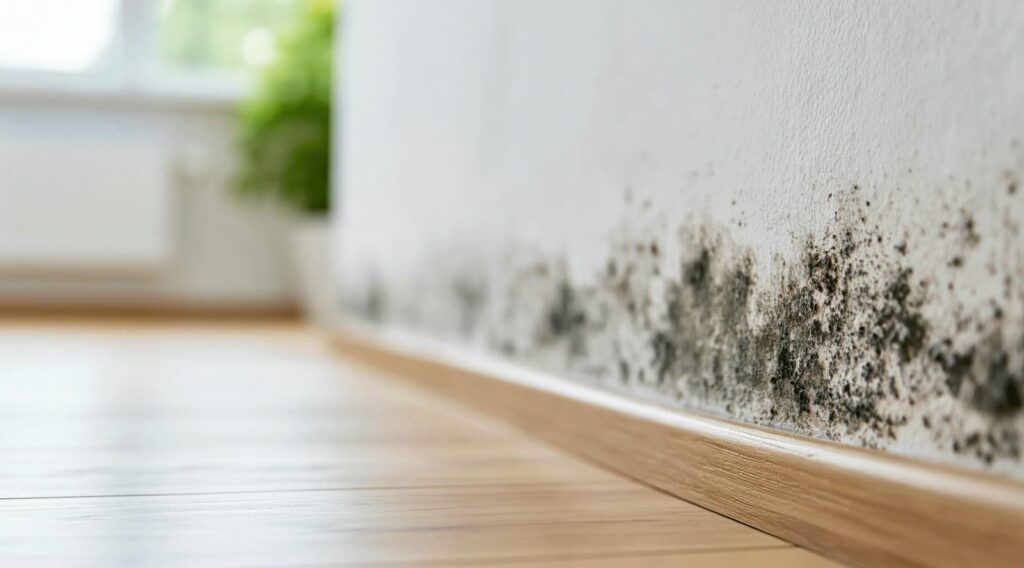
Mold can begin colonizing damp building materials within 24 to 48 hours, even if you can’t see it yet. You need to stop the water source immediately, dry the area fast, and isolate contaminated spaces before spores spread. Some materials must come out, while others can be cleaned and stabilized with the right method. The difference between a safe recovery and a recurring problem often comes down to what you do next.
Key Takeaways
- Inspect damp areas quickly for mold, odors, staining, and hidden growth within 24–48 hours.
- Stop the leak, remove standing water, and dry the area with fans and dehumidifiers.
- Contain the affected space by sealing doors, vents, and seams to prevent spore spread.
- Remove unsalvageable porous materials like wet drywall, insulation, carpet pad, and particleboard.
- Clean remaining nonporous surfaces with HEPA vacuuming and detergent, then dry everything completely.
Inspect for Mold After Water Damage
After water damage, you should inspect affected areas for mold as soon as surfaces begin to dry, because mold can start growing within 24 to 48 hours.
You’ll protect your space by checking walls, baseboards, ceilings, insulation, and hidden cavities for staining, musty odors, discoloration, or fuzzy growth.
Use inspection tools such as a flashlight, moisture meter, and borescope to reach low-visibility areas.
Apply mold identification techniques by comparing texture, color, and spread patterns, but don’t rely on appearance alone.
Document each suspect area with notes and photos so you can track changes and share accurate information with your remediation team.
When you inspect methodically, you’re not just protecting a building—you’re safeguarding the people who belong in it.
Stop the Leak and Dry the Area Fast
Shut off the water source immediately and contain the spread so the damage doesn’t worsen.
Then use leak detection to find the exact failure point, whether it’s a supply line, roof penetration, or appliance seal. Repair the source before you restore service.
Next, remove standing water with a wet vac, squeegee, or pump, and increase airflow with fans and dehumidifiers. Open doors and windows only if outdoor humidity is lower than indoors.
Keep a close eye on moisture control by checking hidden cavities, baseboards, and subfloor edges with a meter. Dry materials within 24 to 48 hours whenever possible.
You’re not just protecting your property—you’re joining a community of owners who act fast, document conditions, and prevent avoidable structural deterioration.
Contain the Mold Before Cleaning
Before you scrub or disturb any mold, isolate the affected area so spores don’t spread to clean rooms.
Use mold containment strategies that create a controlled work zone you can trust:
- Close doors and vents.
- Seal seams with plastic sheeting and tape.
- Run a negative-air fan if available.
You should apply effective sealing techniques at openings, then verify that the barrier stays tight under airflow.
Turn off HVAC serving the space, and protect adjacent rooms with clear signage so everyone knows where the safe boundary starts.
If you’re part of a team, assign one person to monitor the seal while others work.
Careful containment keeps the job predictable, reduces cross-contamination, and helps you move forward with confidence and precision.
Remove Materials You Can’t Salvage
Once the area is contained, remove any materials that can’t be saved, since porous items often hold mold deep in the material.
You should base each decision on a careful mold assessment and salvage evaluation, so you’re not guessing about what stays and what goes.
Pull out soaked drywall, insulation, ceiling tiles, carpet pad, and warped particleboard that show growth or persistent odor.
Bag debris in heavy-duty plastic and seal it before you move it through the home.
If you’re unsure whether a component can be dried and kept, treat it as unsalvageable until a qualified professional confirms otherwise.
Clean Moldy Surfaces Thoroughly
Now that damaged materials are out of the way, you can clean the remaining moldy surfaces with controlled, methodical effort.
Start with surface preparation: vacuum loose debris with a HEPA unit, then wipe dust so cleaners contact the growth directly. Use mold cleaning techniques that match the material and the contamination level.
- Scrub nonporous surfaces with a detergent solution.
- Rinse cloths often to avoid spreading spores.
- Dry each area completely before you move on.
Work in small sections, applying pressure where colonies cling. You’re not rushing; you’re restoring a healthy space your household can trust.
Keep your motion consistent, and replace dirty cloths before they smear residue. When you clean every reachable surface thoroughly, you build the foundation for the next remediation step and reinforce confidence in the result.
Remove Residual Mold and Odors Safely
Even after thorough cleaning, trace mold and stale odors can remain in hidden seams, porous finishes, and HVAC pathways, so you need to address them with controlled methods that won’t spread contamination.
You should use mold removal techniques that target remaining colonies in cracks, under trim, and inside soft materials, then seal and discard items that can’t be fully decontaminated.
For odor neutralization methods, deploy HEPA filtration, activated carbon, and directed ventilation to capture volatile compounds without masking them.
Keep equipment contained, wear proper PPE, and work in small sections so you stay in control and protect the space around you.
When you verify that surfaces are dry, clean, and odor-free, you’ve restored a safer environment your household can trust.
Prevent Mold After Water Damage
To prevent mold after water damage, you need to eliminate moisture quickly and keep relative humidity below 60% until every affected material is fully dry.
You should act within 24 to 48 hours, because spores colonize damp surfaces fast. Use dehumidifiers, fans, and targeted heat for effective humidity control, and verify dryness with a moisture meter.
Follow these mold prevention tips to stay ahead of hidden growth:
- Remove soaked drywall, insulation, and carpeting promptly.
- Clean and disinfect hard surfaces after drying.
- Inspect cavities, subfloors, and HVAC components for trapped moisture.
You belong to a home that stays safe when you monitor humidity daily, fix leaks immediately, and keep airflow steady.
If materials still smell musty or feel cool, keep drying before rebuilding.
Frequently Asked Questions
When Should I Call a Mold Remediation Professional?
Call a mold remediation professional when you spot mold growth larger than 10 square feet, hidden contamination, or recurring dampness. You’ll get proven remediation techniques, protect your home, and belong among prepared homeowners.
Can Mold Return After the Area Is Fully Dried?
Yes, mold can return if hidden moisture remains. You’ll prevent new mold growth through strict moisture control, including rapid drying, leak repair, and humidity monitoring, so your space stays safe and belongs to you.
How Do I Know if Mold Has Reached Hidden Spaces?
You’ll need hidden mold detection and moisture assessment: inspect behind walls, under floors, and in ceilings for odors, staining, warping, or elevated readings. Like smoke in a sealed room, mold leaves clues before you see it.
Is Mold Remediation Covered by Homeowners Insurance?
Usually, you’re covered if a sudden, accidental leak caused it, but not for neglect or long-term humidity. Check your insurance policy details, and use mold prevention tips to protect your home and your community.
What Health Symptoms Suggest Mold Exposure?
If you’re wheezing, sneezing, or itching, mold exposure may be at work. Watch for mold allergies, respiratory issues, skin irritation, and immune response changes; where there’s smoke, there’s fire, and your body often signals trouble.
Wrap-Up
You’ve done the hard work: inspected, contained, removed, cleaned, and dried the damage. Ironically, mold only wins when you leave it a damp welcome mat, so keep moisture controlled and air moving. Verify every surface is fully dry, monitor humidity, and fix leaks immediately. If odors linger or growth returns, you haven’t finished the job yet. Treat hidden moisture like the real problem it is, and you’ll keep mold from making an encore.